Pollution is the introduction of contaminants into a natural environment that causes instability, disorder, harm or discomfort to the ecosystem
i.e. physical systems or living organisms.Pollution can take the form of chemical substances
or energy
, such as noise, heat or light. Pollutants, the components of pollution, can be either foreign substances/energies or naturally occurring contaminants. Pollution is often classed as point source
or nonpoint source pollution
. The Blacksmith Institute
issues an annual list of the world's worst polluted places. In the 2007 issues the ten top nominees are located in Azerbaijan
, China
, India
, Peru
, Russia
, Ukraine
and Zambia
.
Ancient cultures
Air pollution has always accompanied civilizations. According to a 1983 article in the journal Science, "soot found on ceilings of prehistoric caves provides ample evidence of the high levels of pollution that was associated with inadequate ventilation of open fires." The forging of metals appears to be a key turning point in the creation of significant air pollution levels outside the home. Core samples of glaciers in Greenland indicate increases in pollution associated with Greek, Roman and Chinese metal production.
Official acknowledgement
King Edward I of England banned the burning of sea-coal by proclamation in London in 1272, after its smoke had become a problem. But the fuel was so common in England that this earliest of names for it was acquired because it could be carted away from some shores by the wheelbarrow. Air pollution would continue to be a problem in England, especially later during the industrial revolution, and extending into the recent past with the Great Smog of 1952. London also recorded one of the earlier extreme cases of water quality problems with the Great Stink on the Thames of 1858, which led to construction of the London sewerage system soon afterward.
It was the industrial revolution that gave birth to environmental pollution as we know it today. The emergence of great factories and consumption of immense quantities of coal and other fossil fuels gave rise to unprecedented air pollution and the large volume of industrial chemical discharges added to the growing load of untreated human waste. Chicago and Cincinnati were the first two American cities to enact laws ensuring cleaner air in 1881. Other cities followed around the country until early in the 20th century, when the short lived Office of Air Pollution was created under the Department of the Interior. Extreme smog events were experienced by the cities of Los Angeles and Donora, Pennsylvania in the late 1940s, serving as another public reminder.
Modern awareness
Pollution became a popular issue after World War II, due to radioactive fallout from atomic warfare and testing. Then a non-nuclear event, TheGreat Smog of 1952 in London, killed at least 4000 people. This prompted some of the first major modern environmental legislation, TheClean Air Act of 1956.
Pollution began to draw major public attention in the United States between the mid-1950s and early 1970s, when Congress passed theNoise Control Act, the Clean Air Act, the Clean Water Act and the National Environmental Policy Act.
Bad bouts of local pollution helped increase consciousness. PCB dumping in the Hudson Riverresulted in a ban by the EPA on consumption of its fish in 1974. Long-term dioxin contamination at Love Canal starting in 1947 became a national news story in 1978 and led to the Superfund legislation of 1980. Legal proceedings in the 1990s helped bring to light Chromium-6 releases inCalifornia--the champions of whose victims became famous. The pollution of industrial land gave rise to the name brownfield, a term now common in city planning.
The development of nuclear science introduced radioactive contamination, which can remain lethally radioactive for hundreds of thousands of years. Lake Karachay, named by the Worldwatch Institute as the "most polluted spot" on earth, served as a disposal site for the Soviet Union throughout the 1950s and 1960s. Second place may go to the area of Chelyabinsk U.S.S.R. (see reference below) as the "Most polluted place on the planet".
Nuclear weapons continued to be tested in the Cold War, sometimes near inhabited areas, especially in the earlier stages of their development. The toll on the worst-affected populations and the growth since then in understanding about the critical threat to human health posed by radioactivity has also been a prohibitive complication associated with nuclear power. Though extreme care is practiced in that industry, the potential for disaster suggested by incidents such as those at Three Mile Island and Chernobyl pose a lingering specter of public mistrust. One legacy of nuclear testing before most forms were banned has been significantly raised levels of background radiation.
International catastrophes such as the wreck of the Amoco Cadiz oil tanker off the coast of Brittany in 1978 and the Bhopal disaster in 1984 have demonstrated the universality of such events and the scale on which efforts to address them needed to engage. The borderless nature of atmosphere and oceans inevitably resulted in the implication of pollution on a planetary level with the issue of global warming. Most recently the term persistent organic pollutant (POP) has come to describe a group of chemicals such as PBDEs and PFCs among others. Though their effects remain somewhat less well understood owing to a lack of experimental data, they have been detected in various ecological habitats far removed from industrial activity such as the Arctic, demonstrating diffusion and bioaccumulation after only a relatively brief period of widespread use.
Growing evidence of local and global pollution and an increasingly informed public over time have given rise to environmentalism and theenvironmental movement, which generally seek to limit human impact on the environment.
Forms of pollution

The Lachine Canal in MontrealCanada, is polluted.
The major forms of pollution are listed below along with the particular pollutants relevant to each of them:
- Air pollution:- the release of chemicals and particulates into the atmosphere. Common gaseous pollutants include carbon monoxide, sulfur dioxide, chlorofluorocarbons (CFCs) and nitrogen oxides produced by industry and motor vehicles. Photochemical ozone and smog are created as nitrogen oxides and hydrocarbons react to sunlight. Particulate matter, or fine dust is characterized by their micrometre size PM10 to PM2.5.
- Light pollution:- includes light trespass, over-illumination and astronomical interference.
- Littering:- the criminal throwing of inappropriate man-made objects, unremoved, onto public and private properties.
- Noise pollution:- which encompasses roadway noise, aircraft noise, industrial noise as well as high-intensity sonar.
- Soil contamination occurs when chemicals are released by spill or underground leakage. Among the most significant soil contaminants are hydrocarbons, heavy metals, MTBE, herbicides,pesticides and chlorinated hydrocarbons.
- Radioactive contamination, resulting from 20th century activities in atomic physics, such as nuclear power generation and nuclear weapons research, manufacture and deployment. (Seealpha emitters and actinides in the environment.)
- Thermal pollution, is a temperature change in natural water bodies caused by human influence, such as use of water as coolant in a power plant.
- Visual pollution, which can refer to the presence of overhead power lines, motorway billboards, scarred landforms (as from strip mining), open storage of trash, municipal solid waste or space debris.
- Water pollution, by the discharge of wastewater from commercial and industrial waste (intentionally or through spills) into surface waters; discharges of untreated domestic sewage, and chemical contaminants, such as chlorine, from treated sewage; release of waste and contaminants into surface runoff flowing to surface waters (including urban runoff and agricultural runoff, which may contain chemicalfertilizers and pesticides); waste disposal and leaching into groundwater; eutrophication and littering.
Pollutants
A pollutant is a waste material that pollutes air, water or soil. Three factors determine the severity of a pollutant: its chemical nature, the concentration and the persistence.
Sources and causes
Air pollution comes from both natural and man made sources. Though globally man made pollutants from combustion, construction, mining, agriculture and warfare are increasingly significant in the air pollution equation.
Motor vehicle emissions are one of the leading causes of air pollution. China, United States, Russia, Mexico, and Japan are the world leaders in air pollution emissions. Principal stationary pollution sources include chemical plants, coal-fired power plants, oil refineries,petrochemical plants, nuclear waste disposal activity, incinerators, large livestock farms (dairy cows, pigs, poultry, etc.), PVC factories, metals production factories, plastics factories, and other heavy industry. Agricultural air pollution comes from contemporary practices which include clear felling and burning of natural vegetation as well as spraying of pesticides and herbicides
About 400 million metric tons of hazardous wastes are generated each year. The United Statesalone produces about 250 million metric tons. Americans constitute less than 5% of the world's population, but produce roughly 25% of the world’s CO2, and generate approximately 30% of world’s waste. In 2007, China has overtaken the United States as the world's biggest producer of CO2, while still far behind based on per capita pollution - ranked 78th among the world's nations.
In February 2007, a report by the Intergovernmental Panel on Climate Change (IPCC), representing the work of 2,500 scientists, economists, and policymakers from more than 120 countries, said that humans have been the primary cause of global warming since 1950. Humans have ways to cut greenhouse gas emissions and avoid the consequences of global warming, a major climate report concluded. But to change the climate, the transition from fossil fuels like coal and oil needs to occur within decades, according to the final report this year from the UN's Intergovernmental Panel on Climate Change (IPCC).
Some of the more common soil contaminants are chlorinated hydrocarbons (CFH), heavy metals (such as chromium, cadmium–found in rechargeable batteries, and lead–found in lead paint, aviation fuel and still in some countries, gasoline), MTBE, zinc, arsenic and benzene. In 2001 a series of press reports culminating in a book called Fateful Harvest unveiled a widespread practice of recycling industrial byproducts into fertilizer, resulting in the contamination of the soil with various metals. Ordinary municipal landfills are the source of many chemical substances entering the soil environment (and often groundwater), emanating from the wide variety of refuse accepted, especially substances illegally discarded there, or from pre-1970 landfills that may have been subject to little control in the U.S. or EU. There have also been some unusual releases of polychlorinated dibenzodioxins, commonly called dioxins for simplicity, such as TCDD.
Pollution can also be the consequence of a natural disaster. For example, hurricanes often involve water contamination from sewage, andpetrochemical spills from ruptured boats or automobiles. Larger scale and environmental damage is not uncommon when coastal oil rigs orrefineries are involved. Some sources of pollution, such as nuclear power plants or oil tankers, can produce widespread and potentially hazardous releases when accidents occur.
In the case of noise pollution the dominant source class is the motor vehicle, producing about ninety percent of all unwanted noise worldwide.
Effects
Human health
Adverse air quality can kill many organisms including humans. Ozone pollution can cause respiratory disease, cardiovascular disease, throatinflammation, chest pain, and congestion. Water pollution causes approximately 14,000 deaths per day, mostly due to contamination ofdrinking water by untreated sewage in developing countries. An estimated 700 million Indians have no access to a proper toilet, and 1,000 Indian children die of diarrhoeal sickness every day. Nearly 500 million Chinese lack access to safe drinking water. 656,000 people die prematurely each year in China because of air pollution. In India, air pollution is believed to cause 527,700 fatalities a year.Studies have estimated that the number of people killed annually in the US could be over 50,000.
Oil spills can cause skin irritations and rashes. Noise pollution induceshearing loss, high blood pressure, stress, and sleep disturbance. Mercuryhas been linked to developmental deficits in children and neurologicsymptoms. Older people are majorly exposed to diseases induced by air pollution. Those with heart or lung disorders are under additional risk. Children and infants are also at serious risk. Lead and other heavy metalshave been shown to cause neurological problems. Chemical and radioactive substances can cause cancer and as well as birth defects.
Environment
Pollution has been found to be present widely in the environment. There are a number of effects of this:
- Biomagnification describes situations where toxins (such as heavy metals) may pass through trophic levels, becoming exponentially more concentrated in the process.
- Carbon dioxide emissions cause ocean acidification, the ongoing decrease in the pH of the Earth's oceans as CO2 becomes dissolved.
- The emission of greenhouse gases leads to global warming which affects ecosystems in many ways.
- Invasive species can out compete native species and reduce biodiversity. Invasive plants can contribute debris and biomolecules (allelopathy) that can alter soil and chemical compositions of an environment, often reducing native species competitiveness.
- Nitrogen oxides are removed from the air by rain and fertilise land which can change the species composition of ecosystems.
- Smog and haze can reduce the amount of sunlight received by plants to carry out photosynthesis and leads to the production oftropospheric ozone which damages plants.
- Soil can become infertile and unsuitable for plants. This will affect other organisms in the food web.
- Sulfur dioxide and nitrogen oxides can cause acid rain which lowers the pH value of soil.
Environmental health information
The Toxicology and Environmental Health Information Program (TEHIP) at the United States National Library of Medicine (NLM) maintains a comprehensive toxicology and environmental health web site that includes access to resources produced by TEHIP and by other government agencies and organizations. This web site includes links to databases, bibliographies, tutorials, and other scientific and consumer-oriented resources. TEHIP also is responsible for the Toxicology Data Network (TOXNET) an integrated system of toxicology and environmental health databases that are available free of charge on the web.
TOXMAP is a Geographic Information System (GIS) that is part of TOXNET. TOXMAP uses maps of the United States to help users visually explore data from the United States Environmental Protection Agency's (EPA) Toxics Release Inventory and Superfund Basic Research Programs.
Regulation and monitoring
To protect the environment from the adverse effects of pollution, many nations worldwide have enacted legislation to regulate various types of pollution as well as to mitigate the adverse effects of pollution.
Pollution control
 |
A litter trap catches floating rubbish in theYarra River,
east-central Victoria, Australia
|

A dust collector in Pristina, Kosovo

Gas nozzle with vapor recovery

A Mobile Pollution Check Vehicle in India.
Pollution control is a term used in environmental management. It means the control ofemissions and effluents into air, water or soil. Without pollution control, the waste products from consumption, heating, agriculture, mining, manufacturing, transportation and other human activities, whether they accumulate or disperse, will degrade the environment. In the hierarchy of controls, pollution prevention and waste minimization are more desirable than pollution control. In the field of land development, low impact development is a similar technique for the prevention of urban runoff.
Practices
Pollution control devices
Perspectives
The earliest precursor of pollution generated by life forms would have been a natural function of their existence. The attendant consequences on viability and population levels fell within the sphere of natural selection. These would have included the demise of a population locally or ultimately, species extinction. Processes that were untenable would have resulted in a new balance brought about by changes and adaptations. At the extremes, for any form of life, consideration of pollution is superseded by that of survival.
For humankind, the factor of technology is a distinguishing and critical consideration, both as an enabler and an additional source of byproducts. Short of survival, human concerns include the range from quality of life to health hazards. Since science holds experimental demonstration to be definitive, modern treatment of toxicity or environmental harm involves defining a level at which an effect is observable. Common examples of fields where practical measurement is crucial include automobile emissions control, industrial exposure (e.g.Occupational Safety and Health Administration (OSHA) PELs), toxicology (e.g. LD), and medicine (e.g. medication and radiation doses).
"The solution to pollution is dilution", is a dictum which summarizes a traditional approach to pollution management whereby sufficiently diluted pollution is not harmful. It is well-suited to some other modern, locally scoped applications such as laboratory safety procedure and hazardous material release emergency management. But it assumes that the dilutant is in virtually unlimited supply for the application or that resulting dilutions are acceptable in all cases.
Such simple treatment for environmental pollution on a wider scale might have had greater merit in earlier centuries when physical survival was often the highest imperative, human population and densities were lower, technologies were simpler and their byproducts more benign. But these are often no longer the case. Furthermore, advances have enabled measurement of concentrations not possible before. The use of statistical methods in evaluating outcomes has given currency to the principle of probable harm in cases where assessment is warranted but resorting to deterministic models is impractical or unfeasible. In addition, consideration of the environment beyond direct impact on human beings has gained prominence.
Yet in the absence of a superseding principle, this older approach predominates practices throughout the world. It is the basis by which to gauge concentrations of effluent for legal release, exceeding which penalties are assessed or restrictions applied. The regressive cases are those where a controlled level of release is too high or, if enforceable, is neglected. Migration from pollution dilution to elimination in many cases is confronted by challenging economical and technological barriers.
Greenhouse gases and global warming

Historical and projected CO
2 emissions by country.
Source: Energy Information Administration.
Carbon dioxide, while vital for photosynthesis, is sometimes referred to as pollution, because raised levels of the gas in the atmosphere are affecting the Earth's climate. Disruption of the environment can also highlight the connection between areas of pollution that would normally be classified separately, such as those of water and air. Recent studies have investigated the potential for long-term rising levels of atmospheric carbon dioxide to cause slight but critical increases in the acidity of ocean waters, and the possible effects of this on marine ecosystems.


 Smadav2012 Pro Rev. 9.1 ini disebut-sebut sebagai Antivirus lokal
terbaik.. Dan dalam versi ini
ditambah database virus sebanyak 552
virus
Smadav2012 Pro Rev. 9.1 ini disebut-sebut sebagai Antivirus lokal
terbaik.. Dan dalam versi ini
ditambah database virus sebanyak 552
virus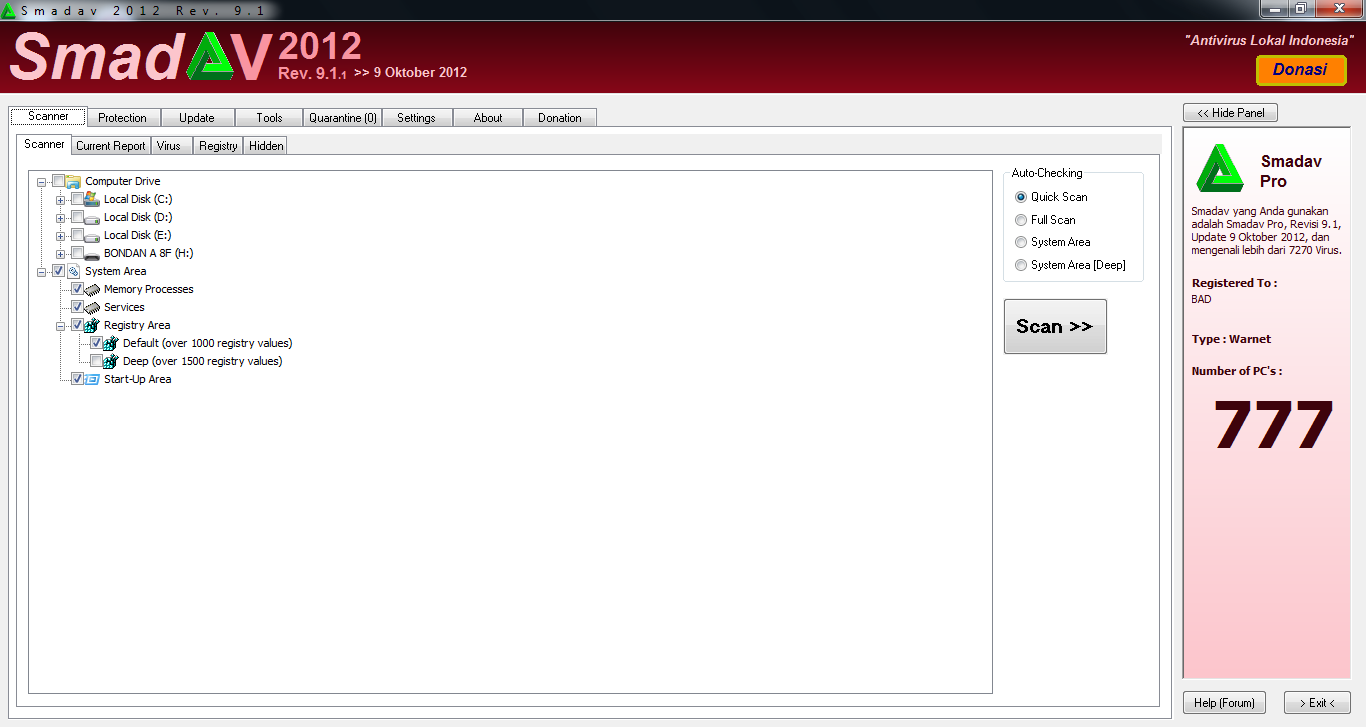

 Wooden Sen'Sey ini merupakan sebuah game pertualangan 2D. Dalam game ini dikisahkan tentang seorang sensei yang semua arak yang dimilikinya dicuri oleh
makhluk luar angkasa. Dan si Sensei Goro harus berpetualang untuk
mengalahkan makhluk-makhluk ini.
Wooden Sen'Sey ini merupakan sebuah game pertualangan 2D. Dalam game ini dikisahkan tentang seorang sensei yang semua arak yang dimilikinya dicuri oleh
makhluk luar angkasa. Dan si Sensei Goro harus berpetualang untuk
mengalahkan makhluk-makhluk ini. 

 Tiny Troopers adalah game perang, sesuai judul nya game ini menggunakan pasukan pasukan kecil, pasukan-pasukan perang yang kita mainkan ini berukuran kecil, cebol-cebol, tapi lucu. Kita bisa bermain Campaign atau Mission, dan berperang dan menyelesaikan misi-misi


 OpenBVE adalah salah satu game simulator kereta api, dengan openbve anda dapat mengedit rute yang dilewati kereta dan rangkaian kereta, dalam openbve indonesia terdapat kereta dan rute yang sama dengan kereta api dan rute di Indonesia, seperti Argo Bromo, Sancaka, KRDE, KRL, Lokomotif yang dimiliki Indonesia, dll. bve
diklaim sebagai game simulasi paling realistis sampai detik ini.
OpenBVE adalah salah satu game simulator kereta api, dengan openbve anda dapat mengedit rute yang dilewati kereta dan rangkaian kereta, dalam openbve indonesia terdapat kereta dan rute yang sama dengan kereta api dan rute di Indonesia, seperti Argo Bromo, Sancaka, KRDE, KRL, Lokomotif yang dimiliki Indonesia, dll. bve
diklaim sebagai game simulasi paling realistis sampai detik ini. 


 Lokomotif Pack
 KRL Seri 103 dan 8000 Pack


 Slender ini diambil dari sebuah nama hantu entah di daerah mana yang
bernama Slender man, ia memiliki badan yang tinggi, memakai jas, memakai
dasi namun wajah nya rata
Slender ini diambil dari sebuah nama hantu entah di daerah mana yang
bernama Slender man, ia memiliki badan yang tinggi, memakai jas, memakai
dasi namun wajah nya rata


 Jenis lokomotif berdasarkan roda


